When
the names of media moguls are question there are the normal responses of names
such as Ted Turner, Oprah Winfrey and Rupert Murdoch. These are all persons
from the US who have had a major impact in media around the world. However
there are several media moguls who have been making an impact in other parts of
the world even though we may not know about them and they may be doing it for
more than just the ideals of money and power. One such media mogul may be
someone you have never heard of yet his story is one that shows that
entrepreneurship can start in the least likely of places and become an on-going
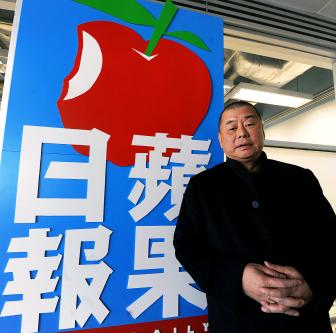
story of David and Goliath. This is the story of Jimmy Lai, the Hong Kong media
mogul whose work in media has made him one of the most controversial Asian media
moguls and “A Thorn in China’s side” (Bloomberg Business Week ,
2003)

Jimmy
Lai is a name that is unfamiliar to many in the Western World
but his impact in the China/Hong Kong/Taiwan debate has been astronomical. Lai
whose Chinese name is Lai Chee-Ying was born in Mainland China (now the People’s Republic of China)
in 1948 at a time when there was full-scale civil war between the Chinese
Communist Party (CCP) and the Nationalist Party, or Kuomintang (KMT), which
broke out immediately following World War II and had been preceded by on and
off conflict between the two sides since the 1920's. (US Department of State) In 1960 at the age
of 12, Lai was smuggled to the island state of Hong Kong which was at that time
a British Protectorate. (Greenwald,
1994)
He arrived penniless and worked as a child labourer. He would work in a
succession of jobs and would pick up his English language skills along the way.
He was described as smart and ambitious and in 1975 he had worked his way
through the ranks to begin his first business, a clothing line named Giordano
(named, oddly, after an Italian restaurant in New York and now has 600 stores
throughout Asia, pulling US$350 million in annual sales.) (Greenwald,
1994)
An entrepreneur and retailer, Lai had amassed a fortune and was able to live
comfortable. However trouble in his birthplace would bring him into the media
business.
The
demonstrations in Tiananmen Square in 1989 helped change Lai’s course and here
he started using his garment business to support the student activists and
their work. In early 1990 he founded Next Magazine and so began his sojourn
into media. He subsequently added several other popular titles to his stable of
publications, including Easy Finder (September 1991, renamed FACE in May 2007),
Apple Daily (June 1995), Sudden Weekly (August 1995), Eat & Travel Weekly
(July 1997) and ME! (December 2006). (GEN Global Editors Network, 2011) Lai then set his
sights on Taiwan, the island nation that the defeated Nationalists from
mainland China moved to and which had a democratic system. There, he
established two of the island’s leading newspapers Taiwan Next Magazine and Taiwan
Apple Daily. Both were versions of his Hong Kong Based news magazines and
held 45% of the readership of the island’s
news. He would also go on to establish Sharp Daily as well as Next Animation
which covers the news in animation. He had a well established news network
covering both Hong Kong and Taiwan and ventured into television as well as
e-commerce. In 2012 he sold his stake in both Taiwanese publications as well as
the TV arm of his Taiwan operations. He however maintains the Next Animation
company. In 2013 will move to establish an electronic platform for a free new
publication for smart phones. (Bloomberg Business Week , 2003)

But
what exactly makes Jimmy Lai a media mogul and what characteristics make him an
entrepreneur to be emulated?
A
media mogul is someone who displays that influence in public media—whether on
TV, in the radio, in movies, or in magazines and newspapers. (Your Dictionary
Reference, 2012)
Lai has certainly shown his influence in media. After his shift in ideals because
of the crackdown by the Chinese government in Tiananmen
Square he moved to use a tool which he saw was for the public good. "I got
the idea to do this magazine during the Tiananmen massacre," Lai told
journalist Jeff Greenwald in 1994. "The fact that the Chinese government
was responding to the demand for democracy by shooting people - that they were
completely unable to deal with the demonstration - showed me just how desperate
and doomed they were. ... It would have to open up to the free flow of
information; and when it did, it would be the biggest market in the world"
he said in that interview. It was his views on democracy and advocacy that
would help put him in the media business and propel him to be successful.
Lai
has exhibited several of the attributes of successful entrepreneurs
specifically five which has led him to be as successful as he is. The first of
these attributes is that of ambition. Lai has always been described as
ambitious from several commentators and contemporaries including Hugo Restall,
editorial page editor of The Wall Street Journal in Asia and Hong Kong and Vivek Couto,
executive director of Media Partners Asia, a research and consulting firm. This is demonstrated from his early days where as
a Chinese immigrant in Taiwan when he
learnt English (the international language of commerce as he would come to
learn) as well as in his working his way through the ranks of the business
world up from a labourer to owning a successful garment and clothing company
which he would sell in 1996. This ambition has been a quality that has driven
his endeavours especially with media and even after his recent moves to sell
his two largest magazines in Taiwan, he is still ambitious to look to the new
frontier of multimedia for his next big business venture.
Lai has always been a salesman with his success in the
garment and retail business with his first business Giordano. This quality of being salesmanship oriented was translated
into his media business ventures as he was able to move into the Taiwanese news
business and take over 45% of the readership with his two largest magazines. (Mai, 2013) This was attributed
by his ability to sell his vision as
well as his newspapers’ ability to generate interest through controversy as
well as its anti-Beijing
rhetoric. One example of
this was the breaking of the story of Bo Xilai, the disgraced Communist Party
official in China by Lai’s Next Magazine in Taiwan. His sales ability has at
times been impeded by his political views. He was unable to have a cable
channel pick up his Next TV in Taiwan and as such was unable to make a profit.
He sold the channel in 2012 to a Chinese company. Some may say this was a loss
but he was able in such a situation to make the best of it, showing why he is
an entrepreneur.
An entrepreneur should be a visionary and Lai has been described
as being a visionary. Lai saw the media business as being a way to deal with
what he saw as being wrong in the Chinese system of governance especially after
the crackdown of Tiananmen Square. “I'm in a business that delivers information - and
information is freedom. That's a great motivator for me.” Lai said in an interview with Wired magazine. It
was his vision for democracy that helped him establish his news business in
Hong Kong especially when he knew of the impending change from a British
Protectorate to a special administrative region of the People’s Republic of
China. His vision also helped him push his news business in Taiwan and despite
the challenges they had mixed successes. His new venture with the Sharpon
Project that is looking at news on an electronic platform for smart phones is
one of the new enterprising ideas and has been hailed by media consultancy
companies including Media Partners Asia. Lai has also been visionary in his delivery
of the news. He has turned news casts animated
and as such made them in his words “fun.” In an interview at the News World
Summit 201, he said “A lot of people
think news is serious and not funny “I don’t know why. Life needs fun in it,
too, and news is life.” This feat would not be done by an ordinary business man
but an entrepreneur.
Lai may be successful as a
businessman but this did not come without one of the attributes that is very
rare among business men. Lai has been a risk taker and this has given him mixed
results. His entry into the news business ruffled some feathers and he had no
experience in the industry yet he took the risk of entering and it has paid off
for him. He took risks by provoking the Communist government in Beijing as well
as causing some problems in the democratic state of Taiwan. This led him to
take on major politicians including former Chinese Premier Li Peng and former
Taiwanese president Chen Shui-bian. This at times caused road blocks for him in
business as seen with regulators blocking his business as well as the several lawsuits
he faced before the court. Yet he has risked not for money but for the ideals
of freedom and democracy. "I think when you are not free you don't have
dignity. And to me it's not a political issue whether you have democracy or
what, it's a moral issue," he told CNN in an interview from his offices in
Hong Kong. He also lost in the dot com era. He tried with an online retailer
Admart but this failed as did so many other dot com businesses. “So much money
was rushing into the online business, I violated all of my principles in
business. … Li Peng didn’t get me. The Internet craze got me” he said in an
interview with Business Week.
Entrepreneurs
are called upon to be innovative. Their new ideas or new takes on old ideas are
what separate them and propel them to become moguls in their fields. Lai used
the media as a tool for democracy and through this innovation especially in
taking on a global economic power such as China. "The Chinese government
had no idea the media was so powerful." He said in the 1994 Wired
interview and because of his innovative use of it, Lai not only became rich but
also influential in the political sphere. He also took an innovative approach
to news with his animated news casts which have become extremely popular. “I
think animation is the future,” Lai said in the News World Summit of 2011.
“Imagine a textbook in school being not only text, but a movie. That’s what
we’re doing.” And even though he has sold his news business in Taiwan he has
held on to Next Animation as he sees this as the future. He is also innovative
as his new project includes using smart phones and the platform of e-magazines.
This innovation may be successful or a flop for him.
Lai’s
work in the promotion of democracy of the media has been a technique that has
helped him benefit from his news business. "I've always wanted to change
things." Lai said of his thrust to ensure democracy remained in Hong Kong
and Taiwan and comes to China “The events of June 4 (The Tiananmen Square
massacre) gave me the inspiration I needed. Now I'm no longer in a business
that just delivers merchandise and makes money; I'm in a business that delivers
information - and information is freedom.” By using his passion for what he is
doing and blending it with his strong beliefs, Lai has been able to grow a
successful media business that has had its ups and downs. While the magazine
units have been successful, his loss in the TV area and his new try at the dot
com business again has shown that Lai is resilient as an entrepreneur and
businessman. He has been able to apply his time from garment industry to help
in his media business. He told Business Week that he has applied the assembly
lime model in his animation business and this has helped streamline his
productions so that they can be completed in the same amount of time as they
run.
Could
Lai be more successful? The answer would be yes. If he were to posture to the
Chinese government he would have access to an untapped market yet he sticks to
something that holds more value to him than money or business opportunities,
the ideals of democracy and freedom. As he was described in a Wired article as
idealistic, jaded and naive, Lai still sees himself as an advocate and as such
will continue to run his businesses in ways that they can achieve more than
profit; Lai is committed to pursuing his business interests in Hong Kong and
Taiwan, as both value the freedom of press. (CNN, 2009)

So what is next for this media
magnate? No one knows but if the course of his life is any indication, Jimmy
Lai will continue his work in the media and may premiere the next innovation.